Top Handle vs Rear Handle Chainsaws: Which Do You Need? (October 2026)
Choose a top handle chainsaw for trained tree care work; choose a rear handle saw for ground-level cutting at home. Work position and experience matter more than whether the saw runs on gas or a battery.
On this page (6 sections)
Choose a top handle chainsaw for trained tree care work; choose a rear handle saw for ground-level cutting at home. For the top handle vs rear handle chainsaw decision, work position and experience matter more than the power source.
A top handle saw is compact and suited to pruning or limbing in a canopy. A rear handle saw is a common choice for cutting firewood, fallen limbs and other wood from the ground.
The Makita XCU06Z and Husqvarna T435 are top handle examples. The Husqvarna 120 Mark III and EGO CS1611 are rear handle options for home cutting.
 Best for home firewood and yard cutting
Husqvarna 120 Mark III 16-inch gas chainsaw
 Best for cordless ground-level cutting
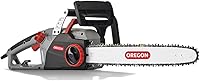
EGO CS1611 16-inch chainsaw kit
Top handle vs rear handle chainsaw: what is the difference?
The main difference is where the handle sits and the work position the saw is designed to support. Handle layout affects how you grip and guide the saw, but it doesn't by itself tell you the saw's power or cutting capacity.
A top handle sits above the saw body. That compact arrangement helps a trained tree care worker maneuver during pruning and limbing in a canopy or confined area.
A rear handle extends behind the body. It gives the operator a grip farther from the cutting end and is suited to two-handed operation at ground level.
Neither style makes every cut safe. A saw's balance, chain, bar, power source and the wood all matter, along with your footing and technique.
What does a top handle chainsaw suit?
A top handle chainsaw suits trained users doing pruning and limbing work in trees. It is compact for maneuvering in the canopy, and some models include a point for hoisting the saw.
The Husqvarna T435 has a heavy-duty rope attachment point for hoisting. Its top handle supports maneuvering in a canopy or confined environment.
The Makita XCU06Z is a battery powered option with a 10-inch chain. Makita describes its compact top handle design for pruning, trimming and limbing.
A small saw is not a reason to work from a ladder or cut above your skill level. Tree work can involve unstable limbs, changing balance and a saw close to your body.
What does a rear handle chainsaw suit?
A rear handle chainsaw suits ground-level tasks such as cutting firewood, fallen limbs and small trees. Its layout is a practical match for a homeowner who can work on stable footing.
The Husqvarna 120 Mark III is a 16-inch gas saw for home and garden tasks. The EGO CS1611 is a 16-inch battery saw with a 56V battery and charger included.
If you are deciding between fuel types for a ground saw, see our guide to corded vs cordless chainsaws. For larger jobs that need a gas model, our plain gas chainsaw buying guide explains what to compare.
Which handle is safer for your work?
Use the handle style made for your work position, and don't treat a top handle saw as a general purpose shortcut. Top handle models are intended for trained tree care users.
A top handle saw can be easier to position in a canopy, but that does not make it easier or safer for an inexperienced user. Working at height adds fall risks, while cutting limbs can release stored tension or shift the branch.
For ground work, keep both hands on the saw and stand on firm footing. Avoid cutting above shoulder height, and don't cut from a ladder with a chainsaw.
Wear suitable protective equipment, including eye, hearing, leg and foot protection. Our guide to chainsaw safety gear for home use covers the equipment to consider before cutting.
If a job requires climbing, overhead cuts or removing a large limb, get a trained tree care professional. A rear handle saw is not a substitute for training, and a top handle saw is not a shortcut to it.
How do weight and chain length affect the choice?
Compare the complete saw and the wood you need to cut; handle position alone won't tell you which model is manageable. Weight, chain length and balance all affect how a saw feels during a job.
The Makita XCU06Z weighs 7.2 pounds and has a 10-inch chain. The Husqvarna T435 weighs 7.5 pounds and has a 14-inch chain.
The Husqvarna 120 Mark III weighs 10.7 pounds and has a 16-inch chain. The EGO CS1611 also has a 16-inch chain and weighs 9 pounds.
Those weights may not represent a ready-to-cut setup with battery, fuel and bar oil. Check the saw manual for operating weight and recommended bar details before buying.
Our guide to how much a chainsaw weighs explains why the tool's stated weight is only part of what you carry. To choose a chain length for your usual cuts, read what chainsaw bar length you need.
Should you choose gas or battery power?
Choose power by the job, your access to batteries or fuel, and the maintenance you want to handle. Either handle layout can come with a different power source, so don't assume top handle means gas or rear handle means battery.
The Makita XCU06Z uses an 18V LXT battery, sold separately. Makita says it can make up to 175 cuts in 2 x 2 cedar with a 5.0Ah battery, but that is a maker claim for a specific material and setup.
The EGO CS1611 includes a 56V 2.5Ah battery and charger. EGO says it can make up to 130 cuts in a 4 x 4 with that battery.
Those cut counts describe different wood dimensions and battery systems, so they aren't a direct comparison. Real work varies with wood, chain condition, technique and pauses between cuts.
Gas models suit users prepared to handle fuel and engine upkeep. Our gas chainsaws guide covers common home uses, while our best pole saws for trimming trees may fit reach needs better than a handheld saw.
What should you buy for common jobs?
For firewood and yard cleanup, choose a rear handle saw; for trained canopy pruning, choose a top handle saw. Start with the work you do most, then compare size, power source and the exact saw's manual.
Choose the Makita XCU06Z for compact battery work
The Makita XCU06Z is a 10-inch top handle saw for pruning, trimming and limbing. It uses one 18V LXT battery, which is sold separately.
Its compact design and torque boost mode fit small cutting tasks where maneuverability matters. The saw has lateral chain tensioning and a captured bar nut for maintenance.
Choose the Husqvarna T435 for gas canopy work
The Husqvarna T435 is a top handle gas saw with a 14-inch chain and a 35.2cc engine. It has LowVib vibration reduction, an inertia-activated chain brake and an adjustable oil pump.
Its rope attachment point helps with hoisting the saw. Reserve this style for trained tree care work rather than routine homeowner cutting from the ground.
Choose the Husqvarna 120 Mark III for home cutting
The Husqvarna 120 Mark III is a rear handle gas saw with a 16-inch chain. It is intended for home and garden tasks such as firewood, light felling and limbing.
It includes an air purge system and a combined choke and stop control. Its inertia-activated chain brake is designed to reduce the likelihood of injury due to kickback.
Choose the EGO CS1611 for battery powered ground work
The EGO CS1611 is a rear handle saw with a 16-inch chain, and its kit includes a 56V 2.5Ah battery and charger. Automatic oiling and tool-free chain tensioning simplify routine setup.
It fits a homeowner who wants battery power for ground-level cutting. Check whether the included battery's runtime fits your workload, and plan for charging between longer sessions.
How do you choose between the two handle styles?
Choose by work position first, then confirm that the saw fits your experience and cutting needs. A saw that matches the task helps you keep a stable stance and use the intended grip.
Pick a top handle only if you are trained for tree care work and need its compact canopy layout. Pick a rear handle for firewood, fallen limbs and routine ground cuts.
For occasional pruning above comfortable reach, a pole saw may be a better fit. For cutting logs on the ground, choose a rear handle saw sized for the wood and your skill.
If the job involves climbing or cutting overhead, hire a qualified professional. For a home saw, compare the Husqvarna 120 Mark III with the EGO CS1611 by power source and the work you need to do.
Frequently asked questions
Are top handle chainsaws harder to use?
Top handle saws are designed for trained tree care work, not general ground cutting. For firewood and yard cleanup, a rear handle saw is usually a more suitable layout.
Choose a saw that fits your experience and work position, and follow its manual.
Can you use a top handle chainsaw on the ground?
A top handle saw can cut from the ground, but its compact form is designed for pruning and limbing in a canopy or confined space. A rear handle saw is a better fit for regular ground work.
Follow the saw manual and use suitable protective gear.
Is a top handle chainsaw lighter?
Some top handle models are compact and light, but handle shape alone doesn't determine weight. The Makita XCU06Z weighs 7.2 pounds and the Husqvarna T435 weighs 7.5 pounds, while rear handle models vary.
Compare the weight of the exact saw and whether its battery or fuel is included.
Which handle is better for cutting firewood?
A rear handle chainsaw is generally a better choice for cutting firewood on stable ground. Its layout suits two-handed operation at a log or bucking support.
Match the bar length to the wood and your experience, and keep the log stable before cutting.
Do top handle chainsaws need special training?
Yes, top handle saws are intended for trained tree care users. Their compact shape does not make them a beginner's shortcut for overhead cutting or working from a ladder.
If you haven't learned safe chainsaw techniques for tree work, hire a qualified tree care professional.