What Length Chainsaw Bar Do You Need?
Choose chainsaw bar length by checking your saw’s approved range and the wood you cut most often. A shorter bar suits many routine home jobs; a longer one needs a saw designed for it.
On this page (8 sections)
- How do you choose chainsaw bar length?
- What does chainsaw bar length measure?
- Which chainsaw bar length suits common home tasks?
- Can you put a longer bar on a chainsaw?
- What must match when you replace a chainsaw bar?
- How do you measure the bar already on your saw?
- What mistakes should you avoid when choosing bar length?
- Which chainsaw bar length should you pick?
Choose chainsaw bar length by matching your saw’s approved range to the wood you cut most often. A 14 or 16 in bar suits many routine home jobs, while a longer bar can help with larger cuts when the saw is designed to run it.
A longer bar doesn’t make every job easier. It adds reach, but can make the saw harder to handle.
Start with your manual and the kind of wood you usually cut. If you’re choosing a complete saw, compare intended uses in our plain gas chainsaw buying guide.
How do you choose chainsaw bar length?
Choose the shortest bar approved for your saw that comfortably handles your regular cuts. That usually gives you enough reach without carrying more bar than your work requires.
First, check the manual for the approved minimum and maximum bar lengths. Then consider the size of the wood, the amount you cut, and whether a longer setup would be useful often enough to justify its added reach and handling demands.
A bar’s advertised length isn’t a guarantee that it’s right for a particular saw. If you’re buying a complete saw for recurring firewood work, our guide to chainsaws for cutting firewood can help you compare the whole setup with your workload.
What does chainsaw bar length measure?
Bar length is the cutting length of the guide bar, measured from the front of the saw body to the bar tip. Common sizes include 14, 16, and 20 in.
A 16 in bar doesn’t mean you’ll always cut through a 16 in log in one pass. The saw body and the angle of approach affect how much wood the chain can reach.
Bar length is also different from chain size. The chain must match details such as pitch, gauge, and drive-link count.
Our guide to finding your chainsaw chain size explains those measurements.
Which chainsaw bar length suits common home tasks?
A shorter approved bar often suits pruning and smaller logs; larger wood may call for more reach and a saw built to handle it. Choose around your regular jobs, rather than the largest cut you might occasionally face.
Is a 14 in chainsaw bar enough?
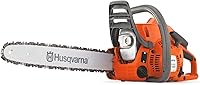
A 14 in bar can suit light home cutting and pruning when the saw is made for that length. The Husqvarna 120 Mark III 14-inch model pairs a 14 in bar with a 38 cc engine.
Choose this size if your usual cuts are modest and you value a shorter reach. Skip it if you regularly cut larger logs; don’t try to make a small setup handle work beyond its range.
Keep the saw stable and work from a secure position. If a cut doesn’t progress comfortably, stop and reconsider the setup instead of pushing harder or reaching with the bar tip.
Is a 16 in chainsaw bar a good middle ground?
A 16 in bar offers more reach for routine yard work when the saw is approved for it. The Husqvarna 120 Mark III 16-inch model has a 38 cc engine and a 16 in bar.
This size may fit you if you handle a mix of branches and moderate logs. It’s a poor fit if most of your work calls for a much shorter, lighter setup, or if the saw’s manual doesn’t approve a 16 in bar.
Don’t choose a bar length by the occasional biggest log alone. A 16 in bar may be a practical compromise for regular varied jobs, but your saw’s approved range and your comfort handling it still decide.
When does a 20 in chainsaw bar make sense?
A 20 in bar makes sense when larger cuts are part of regular work and the saw is approved to run it. It isn’t a routine upgrade for a small saw.
The Husqvarna 450 Rancher comes with a 20 in bar and has a recommended range of 13 to 20 in. Its 50.2 cc, 3.2 hp engine is a different class of setup from the 38 cc Husqvarna 120 models.
Consider it for larger, frequent cutting if you’re comfortable with a bigger gas saw. Skip it if you mostly trim small limbs, rarely cut larger wood, or want the easiest setup to handle; check chainsaw weight and handling as part of that decision.
Can you put a longer bar on a chainsaw?
Use a longer bar only if the saw maker approves that length for your model. A bar that attaches physically can still be unsuitable for the saw.
Check the manual for the approved range and fit details before changing bars. A longer bar adds reach and may demand more from the saw, so don’t assume that a swap will work well just because the mounting parts line up.
Extra length doesn’t keep you safely away from the cut. Keep both hands on the saw, avoid cutting with the bar tip, and follow the safety instructions for your model.
What must match when you replace a chainsaw bar?
Match the replacement bar and chain to your saw’s mount and chain specifications. Length alone can’t confirm that a replacement will fit.
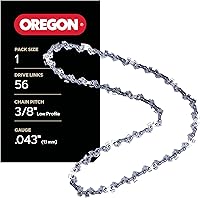
Check the bar mount, chain pitch, gauge, and drive-link count. The Oregon 16-inch bar and chain combo has a 3/8 in low-profile pitch, .050 in gauge, 56 drive links, and an A041 motor mount.
This combo is made for compatible saws up to 42 cc. That doesn’t make it right for every saw in that range.
Compare all the fit details with your manual and existing parts. Our guide to chainsaw chain size can help you confirm what to match.
How do you measure the bar already on your saw?
Measure from the front of the saw body to the tip of the bar to find its cutting length. Don’t measure the full metal bar from end to end.
If the markings are worn or hard to find, check your manual or ask the manufacturer to identify the correct replacement. Note the old chain’s stamped identification too, since its pitch and gauge matter when replacing parts.
What mistakes should you avoid when choosing bar length?
Don’t choose a bar based on length alone. The saw’s approved range, mount, and chain specifications all matter.
A common mistake is assuming that any bar with the right length will fit. Another is replacing a short bar with a longer one simply to get more reach, without checking whether the saw can handle it.
Don’t force a cut when the bar or saw struggles. Keep the work within the saw’s intended capacity, maintain the chain and bar as the manual directs, and stop if the setup feels difficult to control.
A sharp, correctly matched chain helps the saw cut as intended. For more upkeep guidance, see our guide to chainsaw sharpeners and sharpening kits.
Which chainsaw bar length should you pick?
Choose a 14 or 16 in bar for routine home cutting if your saw approves it; choose a longer bar only when larger cuts are common and your saw is built for that range. Your manual and your regular work should guide the decision.
Pick the Husqvarna 120 Mark III 14-inch model for modest cutting and pruning. Choose the 16-inch version if you want more reach for mixed home and yard jobs, or the Husqvarna 450 Rancher if its 20 in bar and approved range suit the larger cuts you expect.
For a replacement bar, compare the mount, pitch, gauge, and drive-link count before you buy. Check chainsaw safety gear for home use before starting work.
Frequently asked questions
What length chainsaw bar is best for home use?
A 14 to 16 in bar suits many routine home tasks, such as pruning and cutting smaller logs, if the saw maker approves that length for your model. Choose based on the wood you cut most often, and check the manual before fitting a different bar.
Is a longer chainsaw bar better?
A longer bar can reach farther into a cut, but it can add weight and needs a saw that can run it. It isn't automatically better for small branches or frequent overhead work.
Match the bar to the saw's approved range and your usual wood size.
Can I put a longer bar on my chainsaw?
Only if the saw maker approves that bar length and the bar and chain match the saw's mount, pitch, gauge, and drive-link count. A longer bar can place more demand on the saw, so don't rely on a physical fit alone.
How do I know what chainsaw bar I have?
Look for markings on the bar or check the saw manual for the bar length and chain specifications. If those aren't clear, measure the cutting length from the front of the saw body to the bar tip, then confirm the chain's pitch, gauge, and drive-link count before replacing parts.