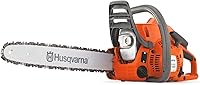
Gas Chainsaws: A Plain Buying Guide for Home Owners
A gas chainsaw suits homeowners who need portable cutting power for firewood, storm cleanup or yard work. Choose a smaller saw for occasional limbs and a larger one only when your wood and workload call for it.
On this page (8 sections)
- When does a gas chainsaw make sense for home use?
- How do you choose a gas chainsaw size?
- What features matter on a homeowner's gas saw?
- Which gas chainsaw fits your home tasks?
- What does owning a gas chainsaw involve?
- Should you choose gas, corded or battery power?
- How can you buy a gas chainsaw safely?
- How should you choose a gas chainsaw for home use?
A gas chainsaw suits homeowners who need portable cutting power for firewood, storm cleanup or yard work. Choose a smaller saw for occasional limbs and a larger one only when your wood and workload call for it.
Gas power frees you from a cord and battery charging, but it also brings fuel, engine maintenance, noise and exhaust. Start with the jobs you expect to do, then compare bar length, engine power, weight and starting features.
For a quick model comparison, see our best gas chainsaws for home use. The right choice depends on your wood and comfort with a saw, not a single “best” size.
When does a gas chainsaw make sense for home use?
A gas chainsaw fits homeowners who need to work far from an outlet or make repeated cuts where battery charging would interrupt the job. It can suit cutting firewood, handling storm debris and trimming branches from the ground.
The trade-off is more upkeep than many electric saws. You need the correct fuel, chain oil, a sharp chain and regular checks of the air filter and other parts described in the manual.
Think about how often you cut. If you only trim small branches near your house, a corded or battery saw may be easier to store and maintain.
Our corded chainsaw guide covers one option for jobs within reach of an outlet.
A gas saw is not a reason to tackle tree felling or overhead cuts beyond your training. For hazardous trees, unstable storm damage or work near power lines, contact a qualified tree professional.
How do you choose a gas chainsaw size?
Choose a gas chainsaw by the largest wood you expect to cut and how often you cut it. A longer bar can reach through wider wood, but it adds length to the tool and does not make a difficult cut safe by itself.
| Typical home task | Starting point | What to weigh |
|---|---|---|
| Light pruning and small limbs | Compact saw with a 14 to 16 in bar | Ease of handling, starting and basic upkeep |
| Occasional firewood | 16 in bar as a practical comparison point | Wood diameter, cut frequency and saw weight |
| Repeated larger firewood cuts | More engine power and a longer bar may help | Experience, control and the wood you process |
| Larger property cleanup | Match saw capacity to the expected work | Storage, maintenance and safe access |
These are starting points, not rules. Bar length alone does not tell you whether a saw has enough power or whether you can use it comfortably.
Our guide to chainsaw bar length explains how to match the bar to the wood. If your main job is splitting rounds into stove lengths, see our chainsaws for cutting firewood guide.
Is a 16-inch gas chainsaw enough?
A 16-inch gas chainsaw can be a reasonable starting point for many light home tasks and some firewood cutting. It is not a promise that the saw will handle every log that measures 16 in across; safe cutting depends on technique, wood position, power and operator skill.
The Husqvarna 120 Mark III, Stihl MS 162 and ECHO CS-3510 each have a 16 in bar. Their stated weights and engine information differ, so compare those alongside the bar size.
When should you consider a longer bar?
Consider a longer bar only if your usual wood and cutting method call for it. The Husqvarna 450 Rancher has a 20 in bar and weighs 11.3 lb, compared with 10.7 lb for the Husqvarna 120 Mark III and 8.2 lb for the ECHO CS-3510.
A longer bar can make a saw harder to control. If you are new to chainsaws, get instruction and choose a size you can handle safely.
What features matter on a homeowner's gas saw?
Prioritize starting, chain safety, vibration and manageable weight. These features affect how the saw fits your routine, but none removes the need to follow the manual and use protective gear.
- Starting controls: An air purge and combined choke/stop control are features of the Husqvarna 120 Mark III. The 450 Rancher has Smart Start and air purge.
- Chain brake: The two Husqvarna models have inertia-activated chain brakes designed to reduce the likelihood of injury due to kickback. Learn how the brake works and keep it maintained.
- Vibration control: The Husqvarna models have LowVib technology with dampeners. The ECHO has a three-point spring vibration reduction system. These features do not make long sessions harmless.
- Weight: The Husqvarna 120 Mark III weighs 10.7 lb, the Stihl MS 162 13.3 lb, the ECHO CS-3510 8.2 lb and the Husqvarna 450 Rancher 11.3 lb.
- Air cleaning: The Husqvarna models and ECHO CS-3510 have air cleaning systems described as removing larger debris before it reaches the air filter. Follow the maintenance schedule regardless.
A feature list cannot replace a safe work plan. Read our chainsaw safety gear guide before buying, and use the protection required for the work you plan to do.
Which gas chainsaw fits your home tasks?
These four gas chainsaws offer different combinations of bar length, stated engine information and weight. Each may suit different home tasks, so compare its features with your work and experience.
Husqvarna 120 Mark III: a compact 16-inch option
The Husqvarna 120 Mark III has a 16 in bar, a 38 cc engine and a listed weight of 10.7 lb. Its air purge, combined choke/stop control, inertia-activated chain brake and LowVib dampeners may suit homeowners comparing a smaller gas saw for home tasks.
Air Injection is designed to remove larger dust and debris particles before they reach the air filter. Husqvarna describes the saw for tasks such as light firewood cutting, limbing and landscaping.
Score: 8.9. Best for light home cutting with a 16 in bar.
Check the manual for fuel, chain and maintenance requirements before use.
Husqvarna 450 Rancher: more power and a 20-inch bar
The Husqvarna 450 Rancher has a 20 in bar, a 50.2 cc engine rated at 3.2 hp and a listed weight of 11.3 lb. Smart Start, air purge, an inertia-activated chain brake and LowVib are among its described features.
Its recommended bar range is 13 to 20 in. The longer bar and larger engine may suit recurring firewood work or yard cleanup that exceeds the needs of a compact saw, but they also make it important to assess control and experience.
Score: 8.7. Best for recurring larger cuts.
Consider it for a larger workload you already have, not occasional small branches.
Stihl MS 162: compare dealer support and handling
The Stihl MS 162 has a 16 in bar and weighs 13.3 lb. Its stated power is 1.2 kW, and its power source is a fuel mix.
The product information does not describe additional features, so compare its handling and service support before choosing it.
Score: 8.2. Best for shoppers comparing a 16 in Stihl saw.
Ask a Stihl dealer to confirm the correct fuel mix, bar and chain setup, and maintenance steps for this model.
Its 16 in bar places it in the same broad size group as the Husqvarna 120 Mark III and ECHO CS-3510. Its stated weight is higher than both, so handling comfort is a key point to consider.
ECHO CS-3510: a lighter listed weight
The ECHO CS-3510 has a 16 in bar, a 34.4 cc engine and a listed weight of 8.2 lb. Its described features include an i-30 starter, a three-point spring vibration reduction system and an air injection air cleaner.
ECHO describes it for storm cleanup, light firewood cutting, limb trimming and felling trees up to 28 in in diameter. That description does not make every tree of that size a suitable homeowner job; assess the tree, surroundings and your experience first.
Score: 7.9. Best for buyers comparing a lighter 16 in option.
The manual and dealer can clarify setup and maintenance details.
What does owning a gas chainsaw involve?
Owning a gas chainsaw means handling fuel and routine upkeep as well as cutting. Build the time and storage into your decision before choosing a gas model over an electric saw.
Many two-stroke gas chainsaws need gasoline mixed with two-stroke oil at a model-specific ratio. Follow the manual for the fuel and oil requirements of your model.
Read our guide to mixing gas for a chainsaw before preparing fuel.
Chain oil is a separate need. Check the oil level and chain condition before each use, and stop if the chain is damaged, loose or not cutting as expected.
After use, clean the saw as the manual directs and store fuel safely. Our guide to storing a chainsaw covers between-job storage.
A dull chain makes cutting harder and can affect control. Learn how to identify and maintain the correct chain with our guides to chainsaw sharpening and finding your chain size.
Should you choose gas, corded or battery power?
Choose gas if portable runtime and recurring cuts matter most. Choose corded power for nearby work with outlet access, or battery power if you want cordless use without mixing fuel.
| Power type | Often fits | Main trade-off |
|---|---|---|
| Gas | Work away from outlets and recurring cutting | Fuel, engine upkeep, noise and exhaust |
| Corded electric | Small to moderate jobs near power | Cord reach and outlet access |
| Battery | Portable yard tasks with charging breaks | Runtime depends on battery capacity and charge |
A gas chainsaw does not need a charged battery, but it still needs fuel and maintenance. If your work stays near the house, compare our best corded electric chainsaws before deciding.
For jobs that do not require a handheld chainsaw, a pole saw may suit selected ground-based branch trimming. See our pole saw guide and stay off ladders while operating powered cutting tools.
How can you buy a gas chainsaw safely?
Before buying a gas chainsaw, confirm the manual, bar and chain match, protective gear and service access. Make sure you can get the right replacement chain and know how to maintain the model before the first cut.
Before buying, check:
- The bar length suits the wood you expect to cut.
- The saw's weight and shape feel manageable in a safe, supervised demonstration if available.
- The manual explains fuel mix, chain oil, tensioning and maintenance.
- A nearby dealer can answer setup and service questions.
- You have eye, hearing, hand, foot and leg protection for the work.
- You have a safe place to store the saw and fuel.
Never cut above shoulder height, from a ladder or near power lines. Keep bystanders away, use both hands as directed and stop if the wood shifts or the saw binds.
For storm damage, a leaning tree or a limb under tension, hire a trained professional. Those conditions can release stored force or cause a tree to move without warning.
How should you choose a gas chainsaw for home use?
Pick a 16 in gas chainsaw if your work is mostly light yard cleanup and occasional firewood; compare the Husqvarna 120 Mark III, Stihl MS 162 and ECHO CS-3510 by weight, features and local service. Consider the Husqvarna 450 Rancher if recurring larger cuts justify its 20 in bar and higher stated power.
If your work is close to an outlet or does not need a gas engine, compare electric saws first. For a broader side-by-side look at gas options, continue to our best gas chainsaws for home use.
Frequently asked questions
Is a gas chainsaw a good choice for home use?
A gas chainsaw can suit home use when you need to cut away from an outlet or handle recurring firewood, storm cleanup and yard work. It brings fuel mixing, engine upkeep, noise and exhaust along with that portability, so compare it with a corded or battery saw if your jobs are small and near home.
What size gas chainsaw should a homeowner buy?
For occasional pruning, small limbs and light firewood, compare compact saws with 14 to 16 in bars. Larger wood may call for a longer bar and more engine power, but choose based on the wood you cut and your experience, not the longest bar you can find.
How much power do I need in a gas chainsaw?
Match engine power to the wood and frequency of your work. A smaller engine can be easier to manage for occasional yard tasks, while repeated cuts through larger firewood may justify more power.
More power also means considering saw weight, handling and your ability to control it safely.
Do gas chainsaws need mixed fuel?
Many two-stroke gas chainsaws use gasoline mixed with two-stroke oil, but the required ratio depends on the model. Follow the owner's manual and use the specified fuel and oil.
Our guide to mixing gas for a chainsaw explains the steps and common mistakes.
What safety gear do I need with a gas chainsaw?
Use eye and hearing protection, gloves, sturdy footwear and leg protection made for chainsaw work. A helmet may also be appropriate when overhead branches are involved.
Read our chainsaw safety gear guide and the saw manual before you start.