How Much Does a Chainsaw Weigh?
Chainsaw weight ranges from about 4 to 15 lb across common saw types. The total depends on the saw and whether the stated weight includes its bar, chain, battery, fuel, and oil.
On this page (6 sections)
Chainsaw weight ranges from about 4 to 15 lb across common saw types. The total depends on the saw and whether its stated weight includes the bar, chain, battery, fuel, and oil.
A bare tool figure may leave out parts you'll use every time. For a fair comparison, check whether the stated weight includes the bar, chain, battery, fuel, and bar oil.
How much does a chainsaw weigh by type?
Small pruning saws can weigh about 4 to 7 lb, while many homeowner saws weigh roughly 9 to 15 lb before fluids or a battery. These are broad ranges, not a promise about any one model.
| Saw type | Typical weight range | What affects the total |
|---|---|---|
| Compact pruning saw | About 4–7 lb | Battery and small cutting setup |
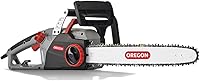
| Corded electric saw | About 8–12 lb | Motor, bar, chain, and cord |
| Battery chainsaw | About 7–13 lb | Saw body, bar, chain, and battery |
| Homeowner gas chainsaw | About 9–15 lb | Powerhead, bar, chain, fuel, and oil |
These ranges are general estimates. Check the manufacturer's weight definition because a bare powerhead, tool-only saw, and ready-to-cut setup include different parts.
The DeWalt pruning chainsaw weighs 2.09 kg, about 4.6 lb, as a tool-only model. Its battery is sold separately, while the Greenworks chainsaw weighs 10.9 lb and includes a battery and charger.
What does a chainsaw weight include?
Chainsaw weight may mean the body alone or the complete saw ready to cut. Check whether the bar and chain, battery, fuel, and oil are included.
A powerhead weight leaves off the bar and chain. The DeWalt is a tool-only model, and its battery is sold separately.
Gas saw weights can also vary depending on whether fuel and bar oil are counted.
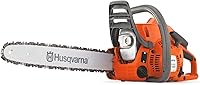
The Husqvarna 120 Mark III weighs 10.7 lb, and the 455 Rancher weighs 13.2 lb. Check each weight definition to see whether it reflects the fully fueled, ready-to-cut setup.
Check the manual or manufacturer specifications for the weight definition. If you need to carry the saw between jobs, include the battery or fuel and oil in your estimate.
Does chainsaw weight change how it feels?
Yes, weight and balance affect how much effort it takes to hold and guide a saw. A few extra pounds can feel more noticeable when the saw is held away from your body or used for repeated cuts.
Weight is only one part of handling. A long bar can move the balance forward, while a well-placed handle and vibration controls may make a saw easier for some people to manage.
Don't choose a saw by the lowest weight alone. Match the bar and cutting setup to the wood, and use the saw only for tasks described in its manual.
How does chainsaw bar length affect weight?
A longer bar and chain add weight and can shift the saw's balance forward. Choose a bar suited to the wood you expect to cut, then compare the weight of the complete setup.
A longer bar isn't automatically better for routine yard work. Our guide to choosing a chainsaw bar length explains how to match bar size to the job.
Is a lighter chainsaw always better?
A lighter saw can be easier to carry, but it may not suit every cutting job. The right choice balances weight with the bar length and power needed for your work.
A compact pruning saw can suit small branches and tight spaces. For firewood or larger cuts, you may prefer a larger saw, provided you can handle it safely and follow its manual.
If you're comparing gas models for home use, see our plain gas chainsaw buying guide. For corded options, our guide to the best corded electric chainsaws covers a different power setup.
How can you compare chainsaw weights fairly?
Compare saws with the same parts included and with similar bar lengths. This gives you a more useful estimate of what you'll lift during a cut.
Use this checklist:
- Check whether the number is powerhead, tool-only, or complete weight.
- Add the battery for a cordless saw if it isn't included.
- Account for fuel and bar oil on a gas saw.
- Compare similar bar lengths and intended tasks.
- Consider how you'll carry and store the saw, too.
For more gas models and use cases, browse gas chainsaws for home use. For another take on bar size, read what chainsaw bar length you need.
Which chainsaw weight should you choose?
Choose a compact saw if your work is mostly light pruning and easy carrying matters most. Choose a larger saw only when its cutting setup suits your jobs and you can handle its full operating weight safely.
When comparing chainsaw weight, use the complete ready-to-cut figure where possible. Then check bar length, balance, and the saw's intended tasks before deciding.
Frequently asked questions
How much does a chainsaw weigh?
Many small pruning saws weigh around 4 to 7 lb, while homeowner gas saws often weigh about 9 to 15 lb before fuel and bar oil. Battery saws may weigh more with the battery installed.
Check whether the weight includes the bar, chain, battery, and fluids.
Is a battery chainsaw lighter than a gas chainsaw?
Some compact battery saws weigh less than larger gas saws, but the power source alone doesn't decide the weight. Compare complete operating weights, including the battery for a cordless saw and fuel and bar oil for a gas model.
What does powerhead weight mean on a chainsaw?
Powerhead weight usually refers to the saw body without the bar, chain, battery, fuel, or bar oil. It helps compare engine or motor units, but it is lower than the weight you'll lift while cutting.
Check the manual for the maker's definition.
Does a longer chainsaw bar make the saw heavier?
A longer bar and chain add weight at the front of the saw, and they can change how it balances in your hands. Compare the bar length with the wood you plan to cut, then check the complete saw weight rather than choosing by bar length alone.