Corded vs Cordless Chainsaws: Which Should You Buy? (October 2026)
Choose a corded chainsaw for steady work near an outlet, or a cordless saw for room to move. For corded vs cordless chainsaws, match the power source to where you cut, how long you work and how you can recharge or manage a cord.
On this page (9 sections)
- Corded vs cordless chainsaws: which suits your yard?
- How should you compare runtime and work area?
- Which chainsaw gives you more reach?
- What changes during setup and use?
- Do corded and cordless chainsaws need different upkeep?
- Which corded chainsaw fits this comparison?
- Which cordless chainsaw fits this comparison?
- What safety gear and setup should you plan for?
- What should you buy: corded or cordless?
Choose a corded chainsaw for steady work near an outlet, or a cordless saw for room to move. In the corded vs cordless chainsaw decision, work location and job length matter more than the power source alone.
A corded saw runs from an outlet, so it can keep working without a battery recharge. A cordless saw moves freely around the yard, but its runtime depends on the battery, the wood and your cutting pace.
This guide compares reach, runtime, setup and upkeep, then uses 3 electric saws to show the tradeoffs. For more models that need an outlet, see our guide to the best corded electric chainsaws.


Corded vs cordless chainsaws: which suits your yard?
Choose corded if you can work within safe cord reach; choose cordless if you need to move freely. Neither power source makes a saw right for every task, so first consider the location, the amount of cutting and the size of wood you need to handle.
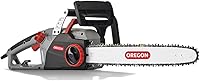
The Oregon CS1500 and Craftsman CMECS600 both need a cord and outlet. The EGO CS1611 comes with a 56V battery and charger, so it can work away from an outlet while the battery has charge.
Think about your most common job, not the longest possible one. Clearing a few branches in one area near the house points toward a corded saw, while moving between work spots across a yard favors cordless.
When does a corded chainsaw make more sense?
A corded saw suits repeated cuts in one place with dependable access to power. You don't need to pause for battery charging, but you do need to keep the cord and outlet setup safe throughout the job.
A corded model can be a practical choice for homeowners who cut near a house, garage or other suitable power source. It also fits a buyer who would rather manage a cord than maintain a set of batteries and plan around charge levels.
The tradeoff is reach. A cord can catch on objects, cross a walking route or enter the cutting area if you don't plan the work path.
If your cuts are spread around a large property, or you need to move through brush and around obstacles, a corded saw may slow you down.
Skip corded if you can't make a safe power connection near the work. Don't improvise with an unsuitable cord or run one where it will be hard to see and control.
When is a cordless chainsaw the better fit?
A cordless saw suits work spread across a yard or a site without a convenient outlet. You gain freedom from an extension cord, but you must fit the job within the battery's available charge or plan a recharge.
The EGO CS1611 includes a 2.5Ah battery and charger. EGO says it can make up to 130 cuts on a 4x4 with that battery, a useful point of reference for that specific cut size.
That count is not a promise for every yard. Wood size and condition, chain sharpness, cutting pace and pauses can all affect how much work you get from a charge.
A cordless kit is a strong fit when portability saves time and the included battery can cover your usual sessions. If your work regularly takes a long stretch, consider whether charging breaks or another compatible battery fit your routine before choosing this setup.
Skip cordless if you expect more runtime than the included battery can provide and don't want to pause or plan another battery. Also account for charging before the job, not only during it.
How should you compare runtime and work area?
Corded models can run while connected to power; cordless models run until their battery needs charging. The practical difference is whether your work is limited by cord reach or by the energy stored in the battery.
A corded saw still depends on a suitable outlet, cord and electrical setup. In a yard with several work zones, moving the cord and checking its route can interrupt the job.
With a battery saw, estimate the work using the manufacturer's guidance and your own task. EGO's up-to-130-cuts claim applies to a 4x4, so use it as a reference for that size instead of assuming it predicts a full day of mixed cutting.
For occasional work, one included battery may be enough if you can recharge between sessions. For longer sessions, decide in advance where you can pause and recharge, or whether a compatible spare battery makes sense.
Consider the whole work cycle. A corded saw may be ready whenever the outlet is available, while a cordless saw needs a charged battery before you begin and a safe place to recharge afterward.
Which chainsaw gives you more reach?
A cordless saw has the advantage when you need to move around without an extension cord. A corded saw can still be practical when the work stays close to an outlet and you can keep the cord clear.
With a corded saw, plan the route before starting and keep the cord behind you and away from the bar. Avoid laying it across paths, and don't pull or carry the saw by its cord.
Cordless power removes that cable from the yard, but it doesn't make a chainsaw suitable for climbing or overhead cutting. Keep your feet and work area stable, and use a tool designed for the job.
For branches above comfortable ground reach, compare a purpose-built pole saw for trimming trees rather than stretching with a chainsaw. A pole saw has its own reach and handling limits, so choose one that matches the branch height and work position.
What changes during setup and use?
Set up a corded saw by planning power and cord routing; set up a cordless saw by charging and checking the battery. Both types need a sound chain, proper tension, bar-and-chain oil and a clear work area before you start.
Read the owner's manual before the first cut. For a corded model, confirm the outlet and cord arrangement meet the manual's requirements, inspect the cord for damage, and plan where it will run as you move.
For a battery model, charge the battery as directed and make sure it is seated correctly before use. Keep the charger and battery in a suitable location, and avoid beginning a long job with an uncertain charge level.
Before cutting with either kind, check that the chain is tensioned as directed and that the oil reservoir has enough bar-and-chain oil. Confirm the brake operates as described in the manual, and clear people, pets and obstacles from the work zone.
Make sure the wood is stable before cutting. Don't hold a branch by hand near the chain or make a cut from an unstable position.
Stop if the saw binds, the cord enters the work area, the battery needs attention or you lose a clear view of the cut.
Do corded and cordless chainsaws need different upkeep?
Both need a sharp, properly tensioned chain and regular bar-and-chain oil. The power source changes how energy reaches the saw, not the basic care the cutting parts need.
The Oregon CS1500 includes an integrated PowerSharp system designed to sharpen the chain on the saw. It also has tool-free tensioning and automatic oiling.
The Craftsman CMECS600 has tool-free chain tensioning, an oil window and automatic oiling. The EGO CS1611 also has tool-free tensioning and automatic oiling, with a spill-free oil reservoir.
Check chain condition, tension and oil according to each manual. A self-sharpening feature can save time, but it doesn't replace inspection or correct chain care.
After a job, clean and store the saw as the manual directs. Let the chain stop fully, disconnect a corded saw from power or remove the battery where directed, and store the equipment so it can't start accidentally.
If you need a refresher, our chainsaw sharpening guide covers sharpener options, and the chain size guide explains how to identify a replacement chain. Match parts to the exact saw rather than guessing from bar length alone.
Which corded chainsaw fits this comparison?
The Oregon CS1500 suits buyers who want a longer bar and an on-saw sharpening system. The Craftsman CMECS600 is a lighter corded option with a shorter bar.
The Oregon fits repeated cutting near power when its 18 in bar and chain-sharpening feature match the work. Its listed weight is 12.6 lb, so consider whether you can handle that weight comfortably over the length of your session.
The Craftsman fits a buyer who wants a shorter-bar corded saw and puts a lighter listed weight high in the decision. At 6.2 lb, it weighs less than the Oregon, though balance and cutting position affect how a saw feels in use.
Choose either only if the corded setup suits your work area. If you need to move between distant parts of the yard, the cord will remain part of every cut.
Which cordless chainsaw fits this comparison?
The EGO CS1611 fits buyers who need cordless movement and want a battery and charger included. Its 16 in bar and stated cut count give you a starting point for estimating the yard work it can cover.
EGO describes the saw as 40CC gas equivalent and says it can make up to 130 cuts on a 4x4 with the included battery. Treat those as manufacturer claims and plan for the wood and conditions you actually face.
At 9 lb, its listed weight is below the Oregon's and above the Craftsman's. Compare the full saw weight and how you expect to hold it, rather than choosing on battery type alone.
What safety gear and setup should you plan for?
Use chainsaw safety gear and follow the manual with either power source. A cord does not prevent kickback, and a battery does not make a moving chain harmless.
Wear suitable eye, hearing, hand, leg and foot protection for chainsaw work. Our chainsaw safety gear guide explains common protective equipment for home use.
Before starting, inspect the chain, tension, oil and brake. For a corded saw, check the cord and route it away from the bar; for a cordless saw, confirm the battery is charged and seated.
Keep bystanders clear and cut only wood you can handle from a stable position. Don't cut above shoulder height or use a chainsaw from a ladder.
A chainsaw is a poor match for work that requires reaching overhead, balancing on a ladder or controlling an unstable limb. Change the tool or the work plan when you can't keep a stable stance and clear path.
What should you buy: corded or cordless?
Pick corded for regular cutting in one powered area; pick cordless when freedom to move matters more. Then compare bar length, weight, chain care and the exact cord or battery arrangement.
The Oregon CS1500 is the corded fit here for its 15A motor, 18 in bar and integrated sharpening system. The Craftsman gives you a 16 in bar and a lower listed weight among these corded choices.
The EGO CS1611 is the cordless fit when you want a battery and charger included and need to work away from an outlet. If your work is mostly larger or more frequent, compare it with a suitable gas chainsaw for home use.
For help matching a saw to the wood, read what chainsaw bar length you need. In the corded vs cordless chainsaw choice, let the job location and length decide first: corded for steady work near power, cordless for scattered work where a cable would get in the way.
Frequently asked questions
Is a corded or cordless chainsaw better?
A corded chainsaw suits repeated work near an outlet, while a cordless saw is easier to move around a yard without managing an extension cord. Choose based on where you cut and how long each job lasts.
For a battery saw, check the included battery and EGO's runtime guidance.
Can a cordless chainsaw cut as well as a corded one?
Both types can handle suitable yard cutting, but performance depends on the exact saw, chain, wood and battery charge. EGO describes the CS1611 as 40CC gas equivalent and it has a 16 in bar.
That claim doesn't make it equal to every corded model in every cut.
How long can you use a cordless chainsaw?
Runtime varies with the battery, wood and cutting pace. EGO says the CS1611 can make up to 130 cuts on a 4x4 with its included 56V 2.5Ah battery.
Treat that as a reference for that cut size, not a promise for every job.
Do corded chainsaws need an extension cord?
They need a power connection within reach, which may mean using an outdoor-rated extension cord suited to the saw and outlet. Follow the owner's manual for cord type and setup.
Keep the cord behind you and away from the bar while working.
Are electric chainsaws safer than gas chainsaws?
Electric power doesn't remove chainsaw hazards. Both corded and cordless saws have moving chains and kickback risks, so use the safety gear and operating steps in the manual.
A cord adds a trip and cutting hazard, while a battery saw needs charging and storage care.