7 Best Gas Chainsaws for Cutting Trees (November 2026)
The best gas chainsaws for cutting trees include the SUPMIXTOOLS 62cc Gas Chainsaw 20 Inch Gas for felling and bucking, the GTHAN STORE 62cc Gas Powered Chainsaw 2-Cycle Gasoline for long sessions in the yard, and the WORKIT 25.4CC Gas Powered Chainsaw for limbing and pruning.
On this page (8 sections)
- The best gas chainsaws for cutting trees, by job
- How these gas chainsaws compare
- How we compared these saws
- What bar length do you need for the trees you cut?
- How much engine power does tree cutting need?
- Should you pick a top-handle or rear-handle saw?
- Gas saw care that keeps tree cutting safe
- The verdict on the best gas chainsaw for cutting trees
The best gas chainsaw for cutting trees is the SUPMIXTOOLS 62cc 20 Inch, because its 62cc engine and 20-inch bar give you the power and reach to fell a tree and cut the trunk into rounds. For limbing branches overhead, pick the WORKIT 25.4cc.
For the widest trunks, the Husqvarna 460 Rancher's 24-inch bar does the work.
Tree cutting is two jobs, not one. Dropping and bucking a trunk calls for engine power and a long bar, while limbing and pruning call for a light saw you can hold at chest height without your arms tiring.
The saws below split along that line. Four run 60cc-class engines with 18 to 24-inch bars, and three are light saws under 10 lb for branches and small trees.
A saw that clears a trunk in one pass can be a burden in a hedge line, so the right pick depends on where most of your cutting happens.
Our picks at a glance
-
1
 Best for felling and bucking
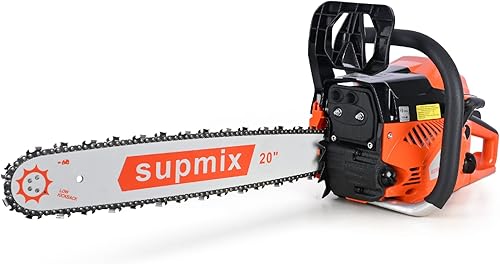
SUPMIXTOOLS 62cc Gas Chainsaw 20 Inch Gas
9.7/10 our score
See it on Amazon -
2
 Best for long sessions in the yard
GTHAN STORE 62cc Gas Powered Chainsaw 2-Cycle Gasoline
8.8/10 our score
See it on Amazon -
3

- 4
 Check it
PROYAMA 62cc Gas Powered Chainsaw
Best for two bar lengths in one saw - 5
 Check it
Husqvarna 435 16-inch gas chainsaw
Best for easy starting - 6
 Check it
Husqvarna 460 Rancher 24-inch gas chainsaw
Best for big trunks - 7
 Check it
V-MODEST Top Handle Chainsaw 12 inch 25cc
Best for work off the ground
The best gas chainsaws for cutting trees, by job
The SUPMIXTOOLS is the strongest all-around choice for felling and bucking, and each other pick wins on a specific task. Match the saw to the work you'll do most, then check the bar length and weight against your own trees.
SUPMIXTOOLS 62cc Gas Chainsaw 20 Inch Gas: Best for felling and bucking
- 62cc 2-cycle engine
- 20-inch bar and low-kickback chain
- 8500 RPM chain speed
- 4.2 hp
- 14 lb
A big two-stroke engine and a long bar make this the saw for dropping trees and cutting trunks into rounds.
Pros
- 62cc engine with 4.2 hp
- 20-inch bar for large logs
- Quick-stop chain brake and safety switch
Cons
- 14 lb is a lot to carry on long walks
- A 20-inch bar is more than small limbs need
SUPMIXTOOLS suits a yard or small woodlot where you're dropping full trees and cutting the trunks into firewood. Its 62cc full-crank engine delivers 4.2 hp, and the 20-inch bar with a low-kickback chain reaches through larger logs in fewer passes.
In daily use, that combination means fewer repositioning cuts in a thick trunk. The ergonomic, well-balanced body helps keep you comfortable through an afternoon of bucking, though 14 lb is real weight to carry to a distant tree.
At 32 inches long end to end, plan the route to the woodpile before you shoulder it.
SUPMIXTOOLS lists a safety switch to stop accidental throttle opening and a quick-stop chain brake, which matter when you're working around a falling tree. The included toolkit covers basic assembly and chain tensioning.
The published starting steps are specific: choke out, switch on, and no more than six pulls before you push the choke back in fully.
It's also the pick if you cut firewood regularly, since the bar suits trunk rounds rather than thin branches. For a separate look at saws sorted by firewood needs, see our guide to the best chainsaw for firewood.
GTHAN STORE 62cc Gas Powered Chainsaw 2-Cycle Gasoline: Best for long sessions in the yard
- 62cc 2-cycle engine
- 20-inch guide bar
- 8500 RPM chain speed
- 4.2 hp
- 14 lb
Same engine size and bar length as the top pick, with an easy-start design for repeated cold starts.
Pros
- 62cc engine with 4.2 hp
- 20-inch bar for thick branches and logs
- Easy-start design and accessible controls
Cons
- Weighs the same 14 lb as the top pick
- Engine brake setup isn't spelled out in its features
GTHAN STORE suits a landowner with a mix of tree and firewood work who wants an easy cold start each session. The 62cc 2-cycle engine makes 4.2 hp and drives an 8500 RPM chain on a 20-inch bar, the same working setup as the top pick.
That means thick branches and full logs get cut without bogging down. The easy-start design and accessible controls keep the routine simple, and routine maintenance is straightforward between jobs.
At 35 inches long it carries like the SUPMIXTOOLS, so a hand cart or truck bed helps when the tree is far from the shed.
The bar reaches through yard trees and storm-felled limbs with few passes, so a morning of cutting goes faster than it would with a short bar. It weighs 14 lb, so plan to set it down between cuts during long sessions.
Choose it if starting ease and steady output matter more to you than a branded brake system. Its feature list covers the easy-start design and accessible controls, so read the manual and follow the choke and stop controls as the maker sets them out.
It's a capable partner for cutting trees on a farm or large yard, and it's listed among the saws in our roundup of gas chainsaws for home owners.
WORKIT 25.4CC Gas Powered Chainsaw: Best for limbing and pruning
- 25.4cc 2-cycle engine
- 12-inch bar and full chisel chain
- 8.2 lb
- Auto oiler
- Top handle
A light top-handle saw for cutting branches off a standing tree and working in cramped spots.
Pros
- 8.2 lb is easy to hold overhead
- Top handle suits one-handed limbing
- Chain brake, baffle and dual safety locks
Cons
- 1.2 hp stalls in big hardwood
- 12-inch bar limits trunk work
WORKIT suits pruning and limbing, where you cut branches off a standing tree rather than felling it. A 25.4cc Xtreme engine makes 1.2 hp and the saw weighs 8.2 lb, so you can hold it overhead for the upper limbs without your shoulders burning out.
The 12-inch bar with a full chisel chain cuts cleanly through branches up to a few inches across. Its top handle and integrated shock absorption give you control in tight spots, like a crowded fence line or dense canopy.
The small body measures about 11 inches each way, so it stows in a truck cab or shed corner.
The OptiSpark ignition and self-resetting stop switch make restarts after a break simple, and the auto oiler keeps the chain fed. A chain brake, protective baffle and dual safety locks round out the safety side.
Replacement chain specs are spelled out in the manual: 3/8 pitch, 0.050 gauge and 45 drive links, so match all three when you buy a spare.
Its trade-off is power: the small engine will stall in big hardwood, and the short bar won't reach through a trunk. Use it for maintenance pruning and leave the felling to a 62cc saw.
When you fill it, follow the gas mixing guide so the ratio is right.
PROYAMA 62cc Gas Powered Chainsaw: Best for two bar lengths in one saw
- 62cc 2-cycle engine
- 18-inch and 22-inch bars included
- 3.5 hp
- 3-point spring anti-vibration
- Transparent fuel tank
Swap between an 18-inch bar for small work and a 22-inch bar for big trunks without buying a second saw.
Pros
- Two bars and chains in the box
- Spring system cuts hand vibration
- Transparent tank shows the fuel level
Cons
- 3.5 hp is less than the other 62cc saws here
- Heavier to swing than a smaller limbing saw
PROYAMA suits a buyer who wants one saw to cover both limbing and trunk cutting. It ships with an 18-inch and a 22-inch bar, so you can run the short bar for branches and switch to the long one for felling firewood trees.
The kit also includes a chainsaw bag, ear defenders and a face shield, so the safety basics arrive with the saw.
The 62cc engine makes 3.5 hp, which is less than the other 62cc saws here but still enough for hardwoods when the chain is sharp. The 3-point spring system absorbs shock and cuts hand fatigue over long sessions.
A transparent fuel tank lets you see the gas level, which helps on a job that runs past one tank. The recoil starter and air filter are designed for fewer pulls and simple cleaning.
PROYAMA also notes the engine is EPA certified, which matters if you run it on a ranch or farm.
The trade-off is weight and the extra bar to store, and 3.5 hp won't outrun the 4.2 hp saws in dense timber. Pick it if versatility at a mid-range price beats outright power.
Read the plain buying guide to gas chainsaws before choosing a bar length.
Husqvarna 435 16-inch gas chainsaw: Best for easy starting
- 40cc X-Torq engine
- 16-inch bar
- 2.2 hp
- Smart Start and air purge
- 9.8 lb
A light all-around saw that starts with little effort, built for occasional tree trimming around the yard.
Pros
- Smart Start and air purge for quick starts
- 9.8 lb is easy to carry
- X-Torq engine cuts emissions and fuel use per Husqvarna
Cons
- 2.2 hp is modest for big trunks
- 16-inch bar tops out at 18 in per Husqvarna
Husqvarna 435 suits a home owner who cuts a few trees a year and wants a saw that starts without fuss. The 40cc X-Torq engine makes 2.2 hp and the saw weighs 9.8 lb, so it's light enough to carry around a yard and swing at a small tree.
Smart Start and air purge take the effort out of cold starts, and the inertia-activated chain brake reduces kickback risk. Husqvarna says the X-Torq engine cuts emissions by up to 60% and raises fuel efficiency by up to 20%, which means fewer trips to the fuel can.
The 16-inch bar handles limbs and small trunks; Husqvarna recommends bar lengths from 13 to 18 inches on this saw. LowVib dampeners keep vibration down, and Air Injection throws dust off the filter before it clogs.
A flip-up fuel cap and a transparent fuel indicator make topping up quick.
Its limit is size: 2.2 hp is modest for large trunks, so it's the trim-and-small-tree saw, not the felling saw for a big oak. Buy it for easy starts and light handling.
The 2-year warranty and the option to extend it with pre-mixed fuel add peace of mind for occasional users.
Husqvarna 460 Rancher 24-inch gas chainsaw: Best for big trunks
- 60.3cc X-Torq engine
- 24-inch bar
- 3.6 hp
- Smart Start
- 13.2 lb
The longest bar here, made for felling large trees and bucking wide trunks on a farm or woodlot.
Pros
- 24-inch bar reaches through wide wood
- 3.6 hp X-Torq engine
- 7-degree offset front handle and LowVib dampeners
Cons
- Long bar makes small limbs awkward
- Moves toward premium pricing
Husqvarna 460 Rancher suits a farm, woodlot or firewood operation with large trees to drop. The 60.3cc X-Torq engine makes 3.6 hp, and the 24-inch bar is the longest in this group, so you can cut through a wide trunk from one side or take big rounds in fewer passes.
The engine holds power at low RPMs, which helps when the chain is buried in hardwood. Smart Start, a combined choke and stop control, and LowVib dampeners keep a long cutting day manageable, and the 7-degree offset front handle improves grip.
At 13.2 lb it's heavy, and a 24-inch bar makes small limbs awkward, so this is a saw for trunk work first. Husqvarna recommends bars from 13 to 24 inches, which gives you room to fit a shorter one for limbing.
A side-mounted tensioner makes chain adjustment easy, and the automatic adjustable oil pump keeps the longer chain lubricated.
It moves toward premium pricing, but the long bar and big engine earn it for serious tree work. The kit includes a small bottle of 50:1 fuel mix and the scrench you need for bar nuts, so you can start the first tank without hunting for tools.
V-MODEST Top Handle Chainsaw 12 inch 25cc: Best for work off the ground
- 25cc 2-stroke engine
- 12-inch bar
- 5.5 lb dry
- 1.5 hp at 12,000 RPM
- Top handle with ring
A climbing saw built for pruning limbs and cutting branches while you stand on a ladder or in a harness.
Pros
- 5.5 lb dry is the lightest here
- Top handle and built-in ring suit tree work
- Chain brake and adjustable oil flow
Cons
- Small 12-inch bar and 25cc engine
- 25:1 fuel mix differs from the other saws here
V-MODEST suits tree climbers and anyone pruning high limbs from a ladder or harness. It weighs 5.5 lb dry, the lightest saw here, and the top handle with a built-in ring keeps it close during raised work.
Fully assembled it comes to 6.9 lb.
The 25cc engine makes 1.5 hp at 12,000 RPM, enough for branches and small logs with a 12-inch bar and a 3/8-inch LP chain. The chain brake stops the chain fast, and the adjustable oil flow and chain tension let you tune it for the wood you're cutting.
It ships as a kit with a bar cover, fuel bottle, funnel, gloves and tool kit, so you can start working once it's fueled. A 1-year manufacturer warranty backs it.
The dual-screw bar mount keeps the bar secure, and the fine-mesh air filter blocks debris while still letting air through.
The trade-off is scale: 25cc and a 12-inch bar won't fell a large tree. Note also the 25:1 fuel mix, which is richer than the 50:1 saws here, so keep a separate can.
For anyone cutting trees from the ground, a longer bar makes more sense.
How these gas chainsaws compare
The table below lines up the specs that decide tree-cutting performance: engine size, bar length and weight. Use it to match a saw to the diameter of your trunks and the height of your branches.
| Product | Best for | Engine | Bar | Weight | Our score |
|---|---|---|---|---|---|
| SUPMIXTOOLS 62cc Gas Chainsaw 20 Inch Gas | felling and bucking | 62cc 2-cycle | 20 in | 14 lb | 9.7 |
| GTHAN STORE 62cc Gas Powered Chainsaw 2-Cycle Gasoline | long sessions in the yard | 62cc 2-cycle | 20 in | 14 lb | 8.8 |
| WORKIT 25.4CC Gas Powered Chainsaw | limbing and pruning | 25.4cc 2-cycle | 12 in | 8.2 lb | 8.7 |
| PROYAMA 62cc Gas Powered Chainsaw | two bar lengths in one saw | 62cc 2-cycle | 18 in and 22 in | 14 lb | 8.4 |
| Husqvarna 435 16-inch gas chainsaw | easy starting | 40cc 2-cycle | 16 in | 9.8 lb | 8.0 |
| Husqvarna 460 Rancher 24-inch gas chainsaw | big trunks | 60.3cc 2-cycle | 24 in | 13.2 lb | 7.9 |
| V-MODEST Top Handle Chainsaw 12 inch 25cc | work off the ground | 25cc 2-cycle | 12 in | 5.5 lb dry | 7.8 |
How we compared these saws
We compared these saws on the specs that matter for cutting trees: engine displacement and horsepower, bar length, chain speed, weight and the safety systems each one names. We also weighed how each saw fits a particular job, because a 24-inch bar is an asset at a trunk and a burden at a branch.
Bar length sets the upper limit on trunk diameter, so we grouped the saws by the work they suit. Engine size decides whether the chain keeps moving in hardwood, and weight decides how long you can keep cutting before you tire.
We also noted the small details that change daily use: whether the tank is transparent, whether the fuel mix is standard, and what comes in the box. A saw that arrives with a spare plug, a wrench and a mixing bottle saves you a trip to the store before the first cut.
Our score weighs specs, features and how well each saw fits what you're shopping for. The SUPMIXTOOLS earns the top score for balanced power, reach and a quick-stop brake at a weight that stays manageable.
We don't run saws in the field. Every figure here comes from the makers' published specs, and we flagged the trade-offs each design brings.
What bar length do you need for the trees you cut?
Match the bar to the tree diameter, not to the biggest tree on your property. A bar that's too long adds weight and asks for more engine to pull the chain.
A bar that's too short forces you to cut from both sides, which is slower and less safe.
Bars for felling and bucking trunks
Felling a tree and bucking the trunk into rounds is the work that sets your bar length. A 20-inch bar covers most yard trees, and a 24-inch bar handles wide trunks like the Husqvarna 460 Rancher does.
The 22-inch bar on the PROYAMA sits between the two, and the 18-inch bar it also ships with lets you drop down for limbing. If your trunks are mostly under 16 inches, a 16 or 18-inch bar with a 40 to 60cc engine works fine.
A rough guide is to pick a bar at least as long as the trunk is wide. That way one pass gets through the middle without the bar tip buried in the far side, which is where kickback risk grows.
Bars for limbing and pruning
Limbing is cutting branches off a felled tree or a standing one, and it wants a short bar. A 12-inch bar like the WORKIT and V-MODEST carry is easy to place between branches and light enough to hold at height.
A 16-inch bar on the Husqvarna 435 covers branches and small trees without the bulk of a trunk saw. Many owners keep two bars for one saw, switching as the job changes, which is the PROYAMA approach.
How much engine power does tree cutting need?
You need enough power to keep the chain moving through the wood you cut. A saw that bogs down mid-cut wastes fuel and time, and a stalled chain in a trunk is a safety problem.
Match power to bar length: a 20-inch bar needs about 60cc behind it, while a 12-inch bar runs well on 25cc.
The 62cc saws here make between 3.5 and 4.2 hp, and they drive 20 to 24-inch bars through hardwoods. The 40cc Husqvarna 435 makes 2.2 hp on a 16-inch bar, which suits occasional trimming.
The small top-handle saws make 1.2 to 1.5 hp on 12-inch bars, enough for branches.
A sharp chain matters as much as horsepower. A dull chain on a 62cc saw cuts slower than a sharp chain on a 40cc saw, so keep a spare and a file on hand.
Chain speed figures are close across the big saws, which tells you the engine size is what separates them in thick wood.
What horsepower means in daily cutting
Horsepower is the engine's rated output, and it shows up as how well the chain holds speed when the bar is buried. A 4.2 hp saw keeps pulling through a knot where a 2.2 hp saw may slow and need a lighter touch.
More power also means more fuel burned and more weight to carry. That's why the top-handle saws make do with 1.2 to 1.5 hp: their job is branches, not trunks.
Should you pick a top-handle or rear-handle saw?
Pick a rear-handle saw for ground work and a top-handle saw for climbing or ladder work. The handle position changes your grip and balance, and that difference shows up in how the saw handles at height.
Rear-handle saws for felling and bucking
Every 62cc and full-size saw here has a rear handle, which gives you two-handed control and leverage for felling cuts and bucking. The balance point sits behind the bar, so the saw feels stable when you lean into a trunk cut.
The Husqvarna 460 Rancher adds a 7-degree offset front handle, which improves grip when you're working around a big trunk. Rear-handle saws are the standard choice for anyone cutting trees from the ground.
Top-handle saws for climbing and ladder work
A top-handle saw puts the grip over the bar, so it hangs compactly when you're up a tree or on a ladder. The WORKIT and V-MODEST both use this layout, and both stay under 9 lb, which matters when you're holding one arm up.
These saws trade trunk power for portability. Use one for pruning limbs and taking down small trees; reach for a rear-handle saw when the trunk hits the ground.
The V-MODEST's built-in ring lets you clip the saw to a harness so it stays within reach between cuts.
Gas saw care that keeps tree cutting safe
A gas chainsaw that starts easily and cuts straight is a saw you maintain between jobs. Fuel mix, chain tension and the air filter cause most of the trouble that shows up on a cutting day.
Most 2-cycle saws here call for a 50:1 gas-to-oil mix, while the V-MODEST calls for 25:1. Mix only what you'll burn in a few weeks, because gas goes stale in the can.
Know the mixing steps for the saw you own, and label each can.
Check chain tension before every session: it should lift slightly off the bar but still snap back. Clean the air filter regularly, especially after dusty work, and keep the chain sharp.
Wear chaps, eye and ear protection and a hard hat, and clear an escape path before you fell anything.
Starting a cold saw without flooding it
The SUPMIXTOOLS manual lays out a cold-start sequence worth knowing for any 2-cycle saw. Push the chain brake forward, pull the choke out fully and switch the ignition on.
Pull the starter no more than six times, stop when the engine fires, then push the choke back in fully before pulling again.
That last step is where many people flood the engine. Pushing the choke in fully, not halfway, lets the saw run clean.
A warm engine skips the choke and the first pulls, so you go straight to pulling the starter.
The verdict on the best gas chainsaw for cutting trees
For most tree cutting, buy the SUPMIXTOOLS 62cc 20 Inch. Its 62cc engine and 20-inch bar handle felling and bucking, and the quick-stop brake and balanced body make long sessions easier.
It's the saw we'd pick for a yard with real trees to drop.
Choose the WORKIT 25.4cc if you're mostly pruning limbs and want a light saw for overhead work. The Husqvarna 460 Rancher wins for the widest trunks with its 24-inch bar, and the Husqvarna 435 suits a home owner who values easy starts over power.
If you cut trees mainly for firewood, the SUPMIXTOOLS and PROYAMA both turn trunks into rounds well. Compare the whole field in our gas chainsaw guide and our roundup of the best gas chainsaws before you buy.
Our top 3 picks at a glance
-
1
Best for felling and bucking
SUPMIXTOOLS 62cc Gas Chainsaw 20 Inch Gas
9.7/10 our score
See it on Amazon -
2
Best for long sessions in the yard
GTHAN STORE 62cc Gas Powered Chainsaw 2-Cycle Gasoline
8.8/10 our score
See it on Amazon -
3
Frequently asked questions
What size gas chainsaw do I need for cutting trees?
A 40 to 50cc saw with a 16 to 18-inch bar covers most yard trees. Go to 60cc and a 20 to 24-inch bar for felling big trunks, and drop to a 25cc top-handle saw for limbs and branches.
Is a 20-inch bar too big for tree work?
No, if you cut trunks and thick branches. A 20-inch bar needs a 60cc-class engine to pull the longer chain, which adds weight.
For limbs and small trees, a 12 to 16-inch bar is easier to control.
Can I cut a tree down with a small chainsaw?
Yes, on small trees. A 25 to 40cc saw handles trunks a few inches across.
Bigger trees call for a longer bar so you can cut through in fewer passes, plus enough engine power to keep the chain moving in hardwood.
Do gas chainsaws need a different fuel mix?
Most 2-cycle saws here run a 50:1 gas-to-oil mix, while the V-MODEST calls for 25:1. Use the ratio the saw's maker specifies, and mix only as much fuel as you'll burn in a few weeks.
What safety gear do I need for tree cutting?
Wear chaps, eye and ear protection, a hard hat and sturdy boots. Use the chain brake when moving between cuts, keep the saw below shoulder height where you can, and clear an escape path before felling.