Are Electric Chainsaws Any Good?
Yes, electric chainsaws are good for many homeowners. Corded models suit regular yard work near an outlet, while battery saws give you more freedom for branches, firewood, and cleanup.
On this page (10 sections)
- Are electric chainsaws any good for normal yard work?
- What are the main advantages of an electric chainsaw?
- What are the drawbacks of electric chainsaws?
- Which electric chainsaw is the best fit for homeowners?
- Is the Black+Decker CS1518 good for branch cutting?
- Is the EGO CS1613 worth choosing over a corded saw?
- How much cutting power do electric chainsaws have?
- What maintenance does an electric chainsaw need?
- How should you choose between these electric chainsaws?
- Pick corded power for steady work near an outlet, or pick the EGO battery kit when freedom of movement matters most.
Yes, electric chainsaws are good for many homeowners because they start quickly, make less noise than gas saws, and avoid gas-oil mixing. Corded models offer steady power near an outlet, while battery models give you more freedom around the property.
The right choice depends on the work. A corded saw fits pruning, storm cleanup, and firewood cutting close to the house, while a battery saw suits larger yards and places where an extension cord is awkward.
Electric chainsaws still need sharp chains, bar oil, correct tension, and safe handling. They are not the best match for every large tree or remote job, but they cover a wide range of homeowner tasks.
Are electric chainsaws any good for normal yard work?
Electric chainsaws are a strong choice for branches, firewood, and routine property cleanup. They provide instant startup and simpler upkeep than gas models, with less noise and no fuel storage.
Corded saws work especially well when your cutting area is close to a suitable outdoor outlet. Their power source stays available throughout the job, so the main limit is the reach and safe management of the extension cord.
Battery saws remove the cord from the work area. That helps when branches are spread across a yard, when you are cleaning storm debris, or when an outlet is not close enough for comfortable cutting.
Both types still need the same core habits. Keep the chain sharp, maintain proper tension, add bar oil, and use the chain brake when you stop or reposition.
For corded options, our guide to corded chainsaw choices explains which features matter when outlet access is part of the job.
What are the main advantages of an electric chainsaw?
The biggest advantages are fast startup, lower routine fuss, and easier access to many homeowner tasks. Electric saws begin with a button or switch rather than a fuel mixture, pull cord, and engine warm-up.
Corded electric chainsaws deliver consistent power while connected. They also avoid battery charging and the need to carry spare battery packs, which makes them useful for longer cutting sessions near a building.
Battery chainsaws offer cleaner movement around the work area. You can carry the saw from one section of a property to another without dragging a cord between shrubs, fences, and wood piles.
Electric motors also make less noise than gasoline engines. That does not make an electric chainsaw quiet, so hearing protection remains sensible, but the lower engine noise is useful in residential settings.
Automatic oiling appears on all 3 products covered here. Tool-free tensioning is also common, which makes routine chain adjustment faster when slack develops.
What are the drawbacks of electric chainsaws?
Electric chainsaws trade fuel handling for cord management or battery planning. A corded saw needs a suitable extension cord and careful attention to where that cord lies, while a battery saw depends on a charged battery and its available cutting time.
A cord can limit movement around a large property. It can also become a distraction if it crosses the cutting path, catches on landscaping, or gets too close to the bar and chain.
Battery saws solve the cord problem but add charging and battery weight. The EGO CS1613 weighs 20.9 lb with its battery system, while the 2 corded models here weigh about 12.5 to 12.6 lb.
Electric saws also have clear size limits. A 16 or 18 in bar is useful for many branches and logs, but large trunk work requires more planning, more clearance, and a saw suited to that scale.
Electric does not mean maintenance-free. A dull chain cuts poorly, loose tension can damage the saw, and a dry bar increases friction.
How does a corded saw compare with a battery saw?
A corded saw wins for steady cutting near an outlet, while a battery saw wins for freedom of movement. Choose based on where the work happens more than on the motor label.
Which electric chainsaw is the best fit for homeowners?
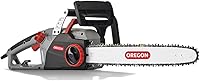
The Oregon CS1500 corded electric chainsaw is the clearest fit for most homeowners who work near an outlet. Its 15A motor, 18-inch bar, automatic oiling, tool-less tensioning, and integrated PowerSharp system cover the main needs of routine cutting.
Why choose the Oregon CS1500?
The Oregon CS1500 starts instantly and includes a PowerSharp self-sharpening system that sharpens the chain in 3 to 5 seconds. That feature targets one of the most common electric saw maintenance tasks.
Its 18-inch guide bar suits branch work, firewood, and general yard cleanup. The chain brake adds a safety feature, while the automatic oiler keeps the bar and chain lubricated during cutting.
The saw weighs 12.6 lb and includes a 2-year Oregon warranty. Its corded design makes it best for a driveway, backyard, or wood pile within safe extension-cord reach.
Read our Oregon CS1500 review for a closer look at this model's features and tradeoffs.
Is the Black+Decker CS1518 good for branch cutting?
The Black+Decker CS1518 is a practical corded choice for homeowners who want an 18-inch bar and simple adjustments. Its 15-amp motor, push-start button, low-kickback bar and chain, and automatic oiling suit pruning and property cleanup.
The tool-free chain tensioning system lets you adjust slack without a separate tool. An oil-level window helps you see when the chain oil needs attention, while the extension cord retainer helps keep the power connection in place during use.
At 12.5 lb, it is close in weight to the Oregon model. Its 18-inch bar gives it useful reach for branches and firewood, but the cord still determines how far from the outlet you can work.
The CS1518 also includes a guide bar scabbard for storage and transport. That is useful when the saw moves between a shed, vehicle, and cutting area.
Pick this model when cord access is easy and straightforward branch work matters more than cordless movement.
Is the EGO CS1613 worth choosing over a corded saw?
The EGO CS1613 is the better fit when you need cordless movement and have a compatible battery system. It includes a 56V 4.0Ah battery and charger, a 16-inch bar and chain, and a brushless motor that EGO rates as equivalent to a 40cc gas chainsaw.
The saw reaches a chain speed of 20 m/s and is designed for hardwood, softwood, branches, and similar cutting tasks. EGO states up to 220 cuts per charge with the included battery, so the kit is aimed at meaningful yard work rather than only light trimming.
Its tool-free tensioning uses independent dials, and the low-profile design allows cutting flush to the ground. Automatic oiling keeps the bar and chain lubricated during cutting.
The tradeoff is weight. At 20.9 lb, the complete kit is much heavier than the 2 corded saws here, so it suits readers who value cordless access more than a lighter carry.
For another battery-saw comparison, see our DeWalt 60V chainsaw review.
How much cutting power do electric chainsaws have?
Electric chainsaws have enough power for many branches, logs, and cleanup jobs when the bar size matches the material. The Oregon and Black+Decker models use 15-amp corded motors, while the EGO uses a 56V battery system and a brushless motor.
Bar length is one practical guide. The 18-inch bars on the Oregon and Black+Decker provide more reach than the EGO's 16-inch bar, while the EGO's cordless design makes it easier to position around a wide property.
The EGO chain runs at 20 m/s, and its 3/8-inch pitch, 0.043-inch gauge chain has 56 drive links. Those details describe the chain setup, not a guarantee that every cut will feel the same in every type of wood.
Use the saw for material that fits its bar and your ability to control it. Do not force the bar through a cut or keep cutting when the chain is dull, the saw binds, or the position becomes unstable.
What maintenance does an electric chainsaw need?
Electric chainsaws need oil, chain tension checks, chain sharpening, and cleaning after use. The motor removes fuel care, but it does not remove the maintenance that keeps the bar and chain working correctly.
Automatic oiling supplies bar-and-chain lubrication during cutting, but the tank still needs oil. Look at the oil level before a job and refill it according to the saw's instructions.
Tool-free tensioning makes adjustment easier on all 3 products. A chain that is too loose can sag and damage components, while excessive tightness increases friction and restricts movement.
The Oregon CS1500 adds an integrated PowerSharp system that sharpens the chain in 3 to 5 seconds. Other chains require a separate sharpening method, such as a file, guide, or electric chainsaw sharpener chosen for the chain.
After cutting, remove sawdust and debris from the bar area. Store the saw with its scabbard or another suitable bar cover, and keep the battery or cord setup protected from moisture.
How should you choose between these electric chainsaws?
Choose the Oregon CS1500 for the best all-around corded fit, the Black+Decker CS1518 for simple 18-inch branch work, and the EGO CS1613 for cordless freedom. The work area should decide the power format before small feature differences decide the model.
Choose the Oregon when you want a self-sharpening system, 15A corded power, and an 18-inch bar. Choose the Black+Decker when its cord retainer, oil window, and low-kickback setup match the way you handle yard cleanup.
Choose the EGO when you need to move across a larger property without a cord and want the included battery and charger in the kit. Accept the heavier complete setup as the cost of that mobility.
So, are electric chainsaws any good? Yes, if you match the saw to the distance, material, and cutting time.
Pick corded power for steady work near an outlet, or pick the EGO battery kit when freedom of movement matters most.
Frequently asked questions
Are electric chainsaws safer than gas chainsaws?
Electric chainsaws avoid fuel mixing, exhaust fumes, and hot engine parts, but they still have a fast-moving chain and kickback risk. Use the chain brake, wear eye and hearing protection, keep both hands on the saw, and follow the safety instructions for your model.
Can an electric chainsaw cut through a tree?
An electric chainsaw can cut branches, logs, and some small trees when the bar length and saw power suit the material. Larger trunks need a saw designed for that work, along with proper felling knowledge and enough room to control the cut.
Do electric chainsaws need chain oil?
Yes, electric chainsaws use bar-and-chain oil to reduce friction and wear. Automatic oiling systems supply lubrication while cutting, but you still need to keep the oil tank filled and maintain the chain tension.
How long do battery chainsaws run?
Runtime depends on the battery, wood, cut size, chain condition, and cutting pace. The EGO CS1613 includes a 4.0Ah battery and states up to 220 cuts per charge, with the exact result changing by the material and cut.