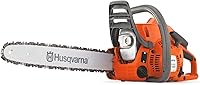
Husqvarna 120 Mark III Gas Chainsaw Review: Worth It? (November 2026)
The Husqvarna 120 Mark III is the best pick here for routine home cutting, with a 16-inch bar, 38-cc X-Torq engine, LowVib dampeners and easier-start features. Choose the 450 Rancher for larger wood or the 135 Mark II for a smaller alternative.
On this page (10 sections)
- Husqvarna 120 Mark III gas chainsaw review at a glance
- Who should buy the Husqvarna 120 Mark III?
- What specifications matter in daily use?
- How does it start and handle?
- What are the engine and air-cleaning benefits?
- How should you set it up and care for it?
- What are the main trade-offs?
- Which Husqvarna chainsaw alternatives are worth considering?
- How does the 120 Mark III compare with the alternatives?
- Is the Husqvarna 120 Mark III worth buying?
The Husqvarna 120 Mark III is the best choice in this review for regular homeowner cutting, including pruning, limbing, light firewood and general yard cleanup. Its 16-inch bar, 38-cc X-Torq engine, air purge system and LowVib dampeners give it a useful balance of reach, starting support and handling.
The main reason to choose something else is the job size. The Husqvarna 450 Rancher brings a 20-inch bar and a 50.2-cc engine for larger wood, while the Husqvarna 135 Mark II is the lighter 16-inch alternative in this group.
Husqvarna 120 Mark III gas chainsaw review at a glance
The Husqvarna 120 Mark III is a compact gas chainsaw for home and garden work. Its 16-inch chain length suits branch cutting, limbing and light firewood preparation without moving into the larger format of the 450 Rancher.
Husqvarna 120 Mark III 16-inch gas chainsaw: Best for routine home cutting

- 16-inch chain length
- 38-cc, 1.8-HP X-Torq engine
- Air purge and combined choke/stop control
- LowVib dampeners
- Air Injection cleaning system
A compact gas saw for home cutting, pruning and light firewood work. Its 16-inch bar, starting controls and vibration dampeners give it the clearest balance for general yard use.
Pros
- 16-inch bar fits common home cutting tasks
- Air purge and combined choke/stop control support easier starting
- Air Injection helps remove larger debris before it reaches the air filter
- LowVib dampeners reduce vibration
Cons
- Less engine power than the 450 Rancher
- Heavier than the 135 Mark II
- Best suited to light and moderate home work
The 38-cc, 1.8-HP X-Torq engine gives this saw a clear place in the homeowner range. It has more purpose-built cutting equipment than a small pruning tool, but the product data positions it around light cutting and landscaping rather than heavy production work.
The starting system is one of its strongest practical features. Air purge removes air from the carburetor and fuel system, while the combined choke/stop control helps reduce the risk of engine flooding.
The saw also combines an inertia-activated chain brake with LowVib technology. The brake is designed to reduce the likelihood of kickback injuries, while dampeners reduce vibration for easier handling.
Who should buy the Husqvarna 120 Mark III?
Buy the Husqvarna 120 Mark III if your work centers on branches, small logs, light firewood and seasonal yard cleanup. The 16-inch bar gives you useful cutting reach while keeping the saw closer to a manageable homeowner format than a 20-inch model.
It suits a homeowner who wants a gas saw for jobs that come up several times each season. The automatic oiler, simple tensioning system and Air Injection cleaning system also support the routine maintenance that comes with regular use.
This is the right pick when you want more reach than a small pruning saw but don't need the extra size of the 450 Rancher. Its listed weight is 10.7 pounds, so it is not the lightest option here, but the LowVib dampeners are aimed at reducing operator fatigue.
Choose another saw if your work often involves larger-diameter wood. The 450 Rancher's 20-inch bar and 3.2-HP engine give it a better match for that need.
The wider gas chainsaw guide for home use can help you compare this type of saw with other fuel-powered options.
What specifications matter in daily use?
The most important daily-use details are the 16-inch bar, 38-cc engine, 10.7-pound weight and starting controls. Together, they describe a saw built for ordinary property maintenance rather than the largest cutting jobs.
| Detail | Husqvarna 120 Mark III |
|---|---|
| Chain length | 16 inches |
| Engine | 38-cc, 1.8-HP X-Torq |
| Power source | Gas powered |
| Weight | 10.7 pounds |
| Dimensions | 29.4 x 9.25 x 10.7 inches |
| Oiling | Automatic oiler |
| Starting support | Air purge; combined choke/stop control |
| Vibration control | LowVib technology with dampeners |
| Air cleaning | Air Injection centrifugal cleaning system |
| Chain brake | Inertia activated |
| Manufacturer part number | 970739616 |
A 16-inch chain length works well for many branches and smaller logs, but the bar size does not turn this into a large-limbering saw. Match the tool to the wood and cutting position instead of forcing a small saw through material better suited to a larger model.
The 10.7-pound weight is the saw itself, so fuel and cutting equipment add to what you handle during work. LowVib dampeners make the handling design more useful over repeated cuts.
How does it start and handle?
The Husqvarna 120 Mark III is designed around easier starting and reduced vibration. The air purge system helps clear air from the fuel system, and the combined choke/stop control reduces the risk of flooding the engine.
LowVib technology uses dampeners to reduce vibration reaching the operator. That does not remove the need for a firm grip, stable footing and controlled cutting, but it gives the saw a handling feature aimed at longer yard sessions.
The inertia-activated chain brake is an important safety feature. It is intended to reduce the likelihood of injury from kickback, so it should be treated as one part of safe operation rather than a substitute for correct technique and protective equipment.
The 16-inch format also affects mobility. It is easier to position around branches than a longer 20-inch bar, especially when the work involves limbing or moving between several small cuts.
Husqvarna uses the LowVib name across several models, but the surrounding package matters. Here, it works with a 16-inch bar, a 38-cc engine and a listed 10.7-pound weight.
What are the engine and air-cleaning benefits?
The 38-cc, 1.8-HP X-Torq engine gives the 120 Mark III enough stated power for its intended homeowner tasks. It is paired with a 50:1 oil tank volume described as 0.32 US pint or 0.15 L.
Gas saw care starts with the fuel system. Use the correct 2-cycle fuel mixture and keep the fuel routine consistent, because the engine depends on gasoline mixed with two-stroke lubricant.
The guide on how to mix gas for a chainsaw covers the basic fuel calculation and storage habits that matter with this type of engine.
Air Injection uses centrifugal cleaning to remove larger dust and debris particles before they reach the air filter. That design can support cleaner air-filter maintenance and is a useful feature when cutting in dusty outdoor conditions.
The automatic oiler also matters in daily work. It supplies chain oil during operation, so the bar and chain have the lubrication system expected from a gas chainsaw.
Keep the oiling area clean and treat chain lubrication as part of every cutting session.
How should you set it up and care for it?
Set up the Husqvarna 120 Mark III by assembling the cutting equipment, preparing the correct fuel mixture and adjusting chain tension before cutting. The saw includes a simple tensioning system for quick adjustments.
The chain should sit correctly in the bar groove and remain properly tensioned during use. A loose chain changes cutting behavior and can create a safety problem, while excessive tension adds strain to the cutting parts.
The air purge and choke/stop control are part of the starting routine. Use the controls in the right sequence for a cold or warm engine, and keep the area around the controls clear of debris.
Daily care should include removing sawdust from the exterior, checking chain condition, checking the bar area and making sure the chain brake operates as intended. Air Injection helps with larger particles, but it does not make cleaning unnecessary.
Store the saw with fuel and oil handled according to the product instructions. Keep it in a dry, secure place with the chain covered when it is not in use.
What are the main trade-offs?
The Husqvarna 120 Mark III's main trade-off is home-sized capacity rather than maximum cutting power. Its 16-inch bar and 38-cc engine fit routine yard work, but the 450 Rancher offers a 20-inch bar and 3.2-HP engine when logs and cleanup become larger.
The 10.7-pound listed weight is another practical consideration. The 135 Mark II has a listed weight of 4.7 pounds, so buyers who focus on carrying weight and quick repositioning may prefer that model.
The 120 Mark III does have a stronger feature balance than the lighter alternative. It combines air purge, combined choke/stop control, Air Injection and LowVib dampeners in a package aimed at easier home use.
Gas power also brings fuel preparation and engine care. That is useful when you need extended cutting without battery charging, but it requires more routine handling than an electric or battery saw.
The best decision depends on the wood you cut most often. For standard home maintenance, the 120 Mark III has the strongest overall fit in this comparison.
Which Husqvarna chainsaw alternatives are worth considering?
The alternatives make sense for two different needs: more cutting power or a lighter 16-inch format. Neither replaces the 120 Mark III as the overall pick for this review, but each has a clear reason to choose it.
Husqvarna 450 Rancher 20-inch gas chainsaw
The 450 Rancher is the better choice for larger wood and heavier cleanup. Its 20-inch bar and 50.2-cc, 3.2-HP X-Torq engine give it the most cutting capacity in this comparison.
It also has Smart Start, air purge, LowVib technology and Air Injection. The ergonomic rear handle, soft inlay and asymmetrical handle are designed around handling a larger saw.
Its listed weight is 11.3 pounds, only 0.6 pounds above the 120 Mark III in the supplied product data. The bigger difference is the bar and engine size, which make it a stronger tool for larger cutting jobs but less natural for small pruning work.
The broader Husqvarna chainsaw comparison guide is useful if you want to compare this model with other Husqvarna options.
Husqvarna 135 Mark II 16-inch gas chainsaw
The 135 Mark II is the alternative for buyers who prioritize a lighter listed weight. It keeps a 16-inch chain length and uses a 38-cc, 2.1-HP X-TORQUE engine.
It has Smart Start, a combined choke and stop control, an inertia-activated chain brake, Air Injection and LowVib technology. The side-mounted tensioning system is positioned for easier slack adjustments.
The product data gives the 135 Mark II a listed weight of 4.7 pounds, which is much lower than the 120 Mark III's 10.7 pounds. That difference makes the 135 Mark II the more appealing option for frequent repositioning or shorter cutting sessions.
The 120 Mark III remains the stronger overall pick here because its feature combination and score better match the broad homeowner search. The 135 Mark II is a focused choice for lighter handling.
How does the 120 Mark III compare with the alternatives?
The 120 Mark III wins for balanced home use, while the 450 Rancher wins for larger cutting and the 135 Mark II wins for a lighter listed format. The bar length, engine output and handling features show the difference clearly.
| Model | Bar | Engine | Listed weight | Best match |
|---|---|---|---|---|
| Husqvarna 120 Mark III | 16 inches | 38-cc, 1.8-HP X-Torq | 10.7 pounds | Routine home cutting |
| Husqvarna 450 Rancher | 20 inches | 50.2-cc, 3.2-HP X-Torq | 11.3 pounds | Larger wood |
| Husqvarna 135 Mark II | 16 inches | 38-cc, 2.1-HP X-TORQUE | 4.7 pounds | Lighter 16-inch option |
The 120 Mark III is the middle-ground saw in practical terms, even though the 135 Mark II has a higher stated horsepower figure in the data. The 120 Mark III's package emphasizes air purge, Air Injection and vibration dampeners for general yard use.
The 450 Rancher is the clear step up in bar length and engine size. Choose it when the work regularly exceeds what a 16-inch saw suits.
Choose the 135 Mark II when moving and holding the saw matters more than the 120 Mark III's broader feature set. Its lower listed weight changes the handling decision.
Is the Husqvarna 120 Mark III worth buying?
Yes, the Husqvarna 120 Mark III is worth buying for a homeowner who needs a gas chainsaw for routine pruning, limbing, light firewood and yard cleanup. The 16-inch bar is practical, the engine suits that work and the starting and vibration features make the package easier to live with.
Buy the 450 Rancher instead when larger logs are a regular part of the job. Its 20-inch bar and 3.2-HP engine give it the clear advantage for heavier cutting.
Buy the 135 Mark II when the listed 4.7-pound weight is your top priority. It is the lighter 16-inch option, with Smart Start and side-mounted tensioning.
For the search behind this Husqvarna 120 Mark III gas chainsaw review, the decision is simple: choose the 120 Mark III for the best overall homeowner balance. It has enough reach for common property work without moving to the larger Rancher's format.
Frequently asked questions
How long is the Husqvarna 120 Mark III chainsaw bar?
The Husqvarna 120 Mark III has a 16-inch chain length. That size fits pruning, limbing, light firewood preparation and many routine yard jobs, while a 20-inch saw such as the 450 Rancher is the stronger match for larger wood.
What engine does the Husqvarna 120 Mark III use?
It uses a 38-cc, 1.8-HP X-Torq engine. The saw also has an air purge system, combined choke/stop control, automatic oiler and a 50:1 oil tank volume described as 0.32 US pint or 0.15 L.
Is the Husqvarna 120 Mark III gas powered?
Yes. It is a gas-powered chainsaw with a 2-cycle X-Torq engine.
Plan for fuel mixing, storage and routine air-filter and chain care rather than the charging routine used by electric and battery saws.
What is the difference between the Husqvarna 120 Mark III and 135 Mark II?
Both use 16-inch bars and 38-cc engines, but the 120 Mark III is the higher-scored pick here because it combines air purge, Air Injection and LowVib features for general home cutting. The 135 Mark II emphasizes Smart Start, side-mounted tensioning and its listed 4.7-pound weight.